The long eave-line, the empty courtyard, the held light
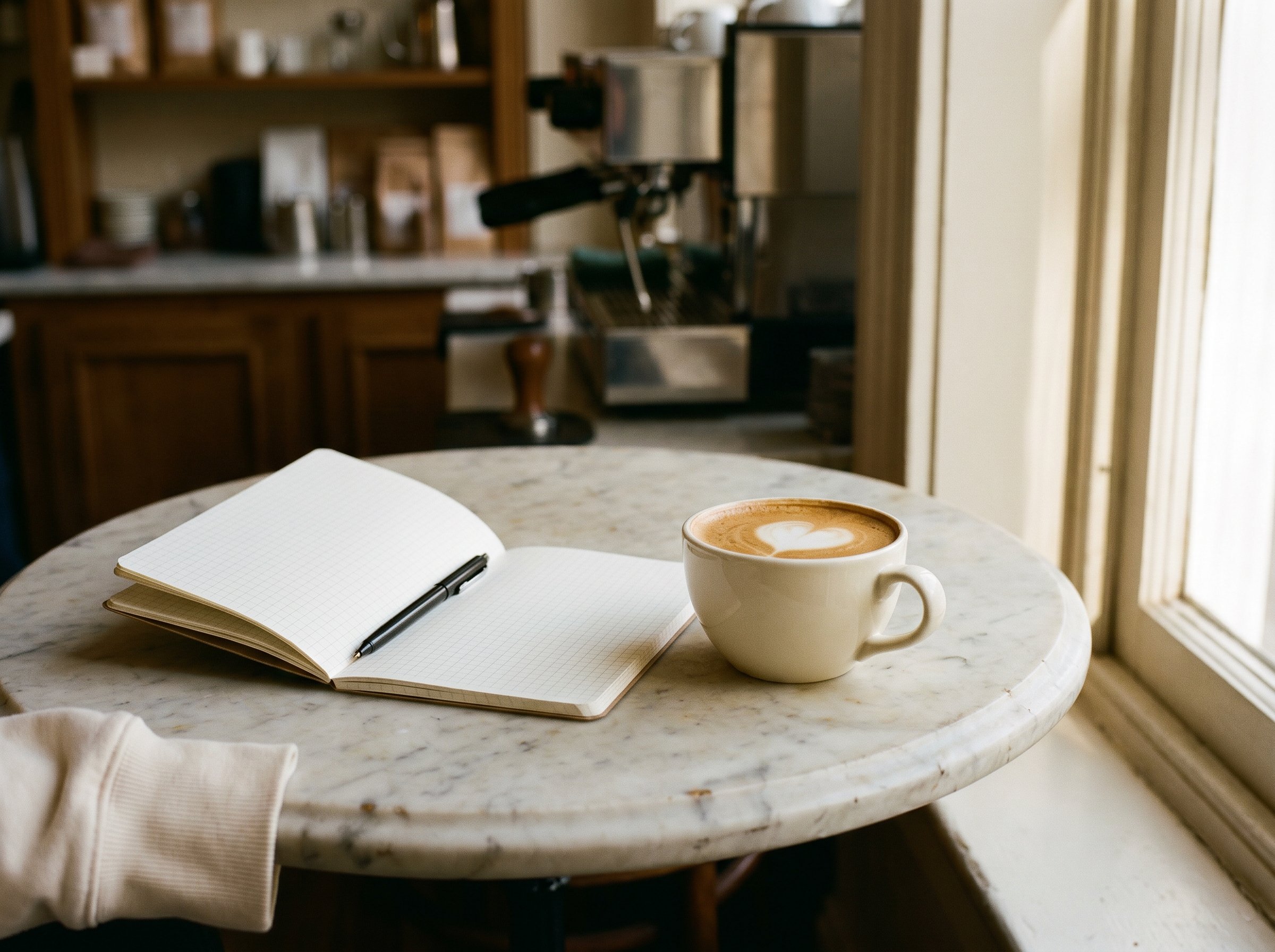
Melbourne does not announce itself in the morning. It arrives at the side of the table, in the angle of the late-autumn sun against the marble at Aunty Peg's, in the way the espresso-machine hisses three short hisses then pauses, in the notebook that stays open on the empty grid-page because the day has not started yet and you do not want to start it either. I sat for forty minutes and wrote nothing. That is sometimes the only honest first hour.
The day broke open at the Heide. I had pencilled in the McGlashan-Everist-Pavilion for the late-afternoon shoot with Karim and then half-expected the courtyard to be crowded with a school-group or a wedding-party or whatever Tuesday-afternoons can do to a museum-courtyard in a quiet city. It was empty. Completely. The long horizontal eave-line of the 1964 modernist-residential pavilion sat there in the warm-amber west-light like it had been waiting for us. Karim arrived from his Brunswick-East studio in his architecture-practice-work-clothes plus a clean-change and we sat on the step for fifteen minutes and just read the architecture together before the camera came out. He pointed at the way the long eave meets the bushland and said the architecture is reading the bushland not the other way around, and I knew the shoot would hold.
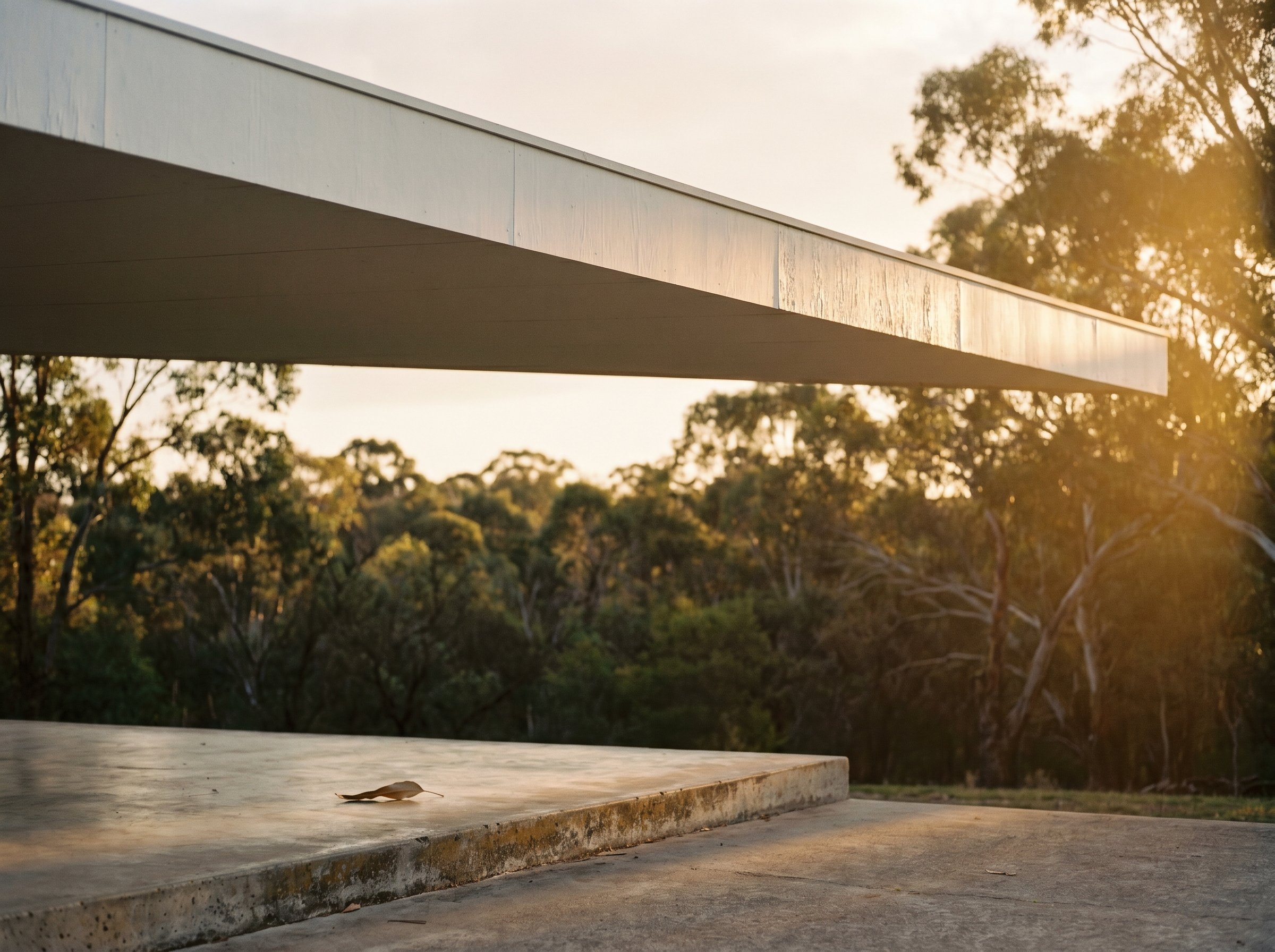
I do not always know in advance whether a light will hold. Today it did. Maybe forty minutes of warm-amber west-light spilling soft along the white-painted plywood, the bushland-horizon catching the same amber on the eucalyptus-line, the polished concrete returning the warm to the underside of the eave. Two final frames. One wide. The making-of with me on the step gesturing toward the eave for the framing-direction while Karim listened, the soft-aluminum-reflector resting on the polished concrete between us. No crew. No assistant. The brief did not need a production-rig, it needed the light and a model who could read the line back without performing the read.
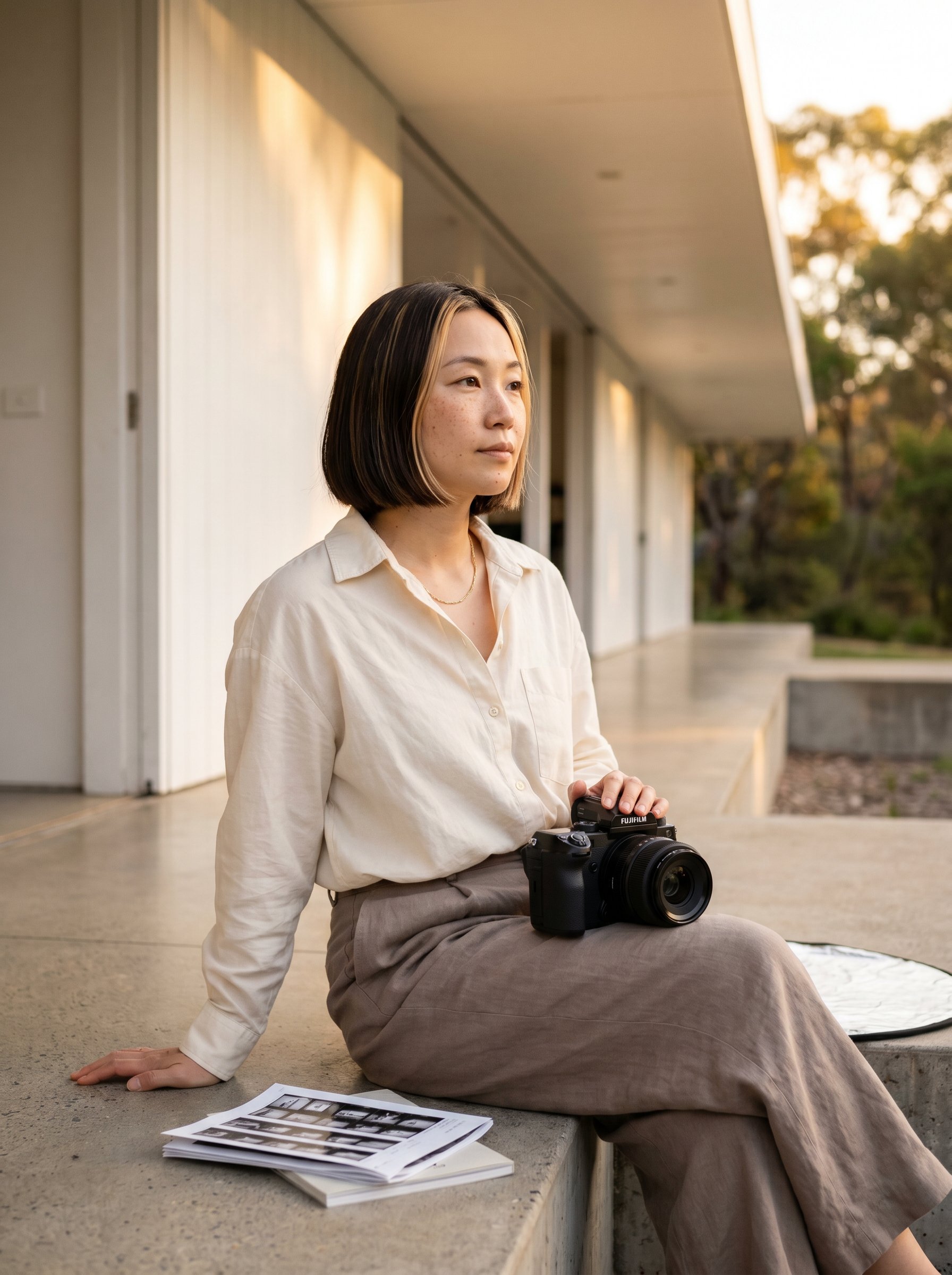
What stays with me from today is not the frames. It is the fifteen minutes on the step before. The way a person who builds buildings reads a building back, the way that read got into his eyes before any shutter clicked. The frames hold that or they do not. Tomorrow is Sydney. A different daylight, a different corridor. I'll close the laptop and let the Heide-light stay where it is for tonight.